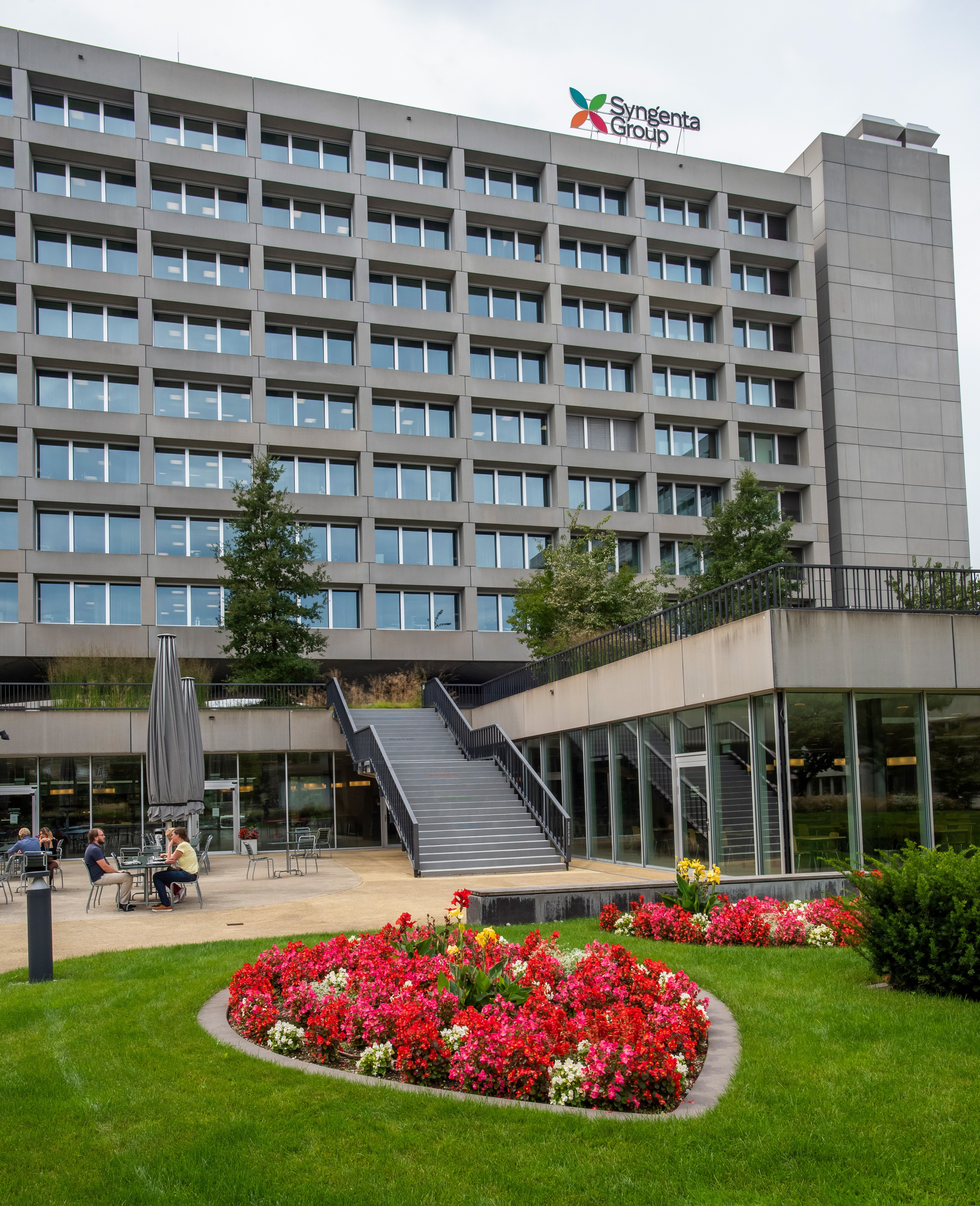
Syngenta Group has confidentially filed for an initial public offering in Hong Kong, moving one of the world's largest agricultural technology companies closer to a return to public markets after years of shifting listing plans. Reuters reported that the Basel-based seeds and crop-protection group, controlled by Chinese state-owned Sinochem, is targeting proceeds of at least $5 billion and could seek as much as $10 billion depending on market conditions. The filing is the material development: earlier this year the market knew Syngenta was evaluating a Hong Kong flotation, but submitting confidential documents advances the process from planning toward execution.
The potential scale makes the transaction relevant well beyond agriculture. A $5 billion offering would already rank among the largest global IPOs of 2026, while a deal near the top of the reported range would become a major test of institutional demand for large China-linked issuers. Reuters reported that Hong Kong companies have raised about $45.8 billion through listings so far this year, building on the market's fundraising revival. A successful Syngenta deal would reinforce Hong Kong's position as a destination for companies seeking deep Asian capital pools at a time when global equity issuance is competing with unusually high government-bond yields.
Syngenta's path to this point has been unusually long. The company previously pursued a Shanghai listing before withdrawing that application in 2024 as the industry environment and Chinese equity-market conditions deteriorated. Earlier 2026 reporting indicated that Syngenta was considering selling roughly 10% to 20% of its equity in Hong Kong and could use proceeds to reduce debt as well as fund research, acquisitions and product development. The latest confidential filing does not guarantee the transaction will launch on a fixed timetable, but it materially reduces the distance between strategic intent and an executable offering.
Why the filing matters for Hong Kong and agriculture
The listing would arrive as agricultural companies face a mixed operating environment. Crop-protection and seed businesses are exposed to farm economics, commodity prices, inventory cycles and currency movements, while innovation requires substantial long-duration research spending. Syngenta reported second-quarter sales of about $5.7 billion, down 7% as it exited a low-margin Chinese business, while currency-adjusted EBITDA increased 4%. That combination matters for prospective investors because it separates headline revenue contraction from underlying profitability and portfolio-quality changes. The IPO valuation will ultimately depend on whether investors believe those earnings improvements can persist through the agricultural cycle.
The transaction also carries a geopolitical dimension. Syngenta was acquired by ChemChina in 2017 and later folded into Sinochem, leaving one of Switzerland's best-known agricultural groups under Chinese state ownership. Earlier reporting indicated that broadening the shareholder base could help reduce the concentration of Chinese ownership as scrutiny of strategic assets and agricultural land remains elevated in the United States and other markets. An IPO would not remove Sinochem's influence by itself, but it could introduce a larger group of international public shareholders and create a transparent market valuation for the business.
For Hong Kong, the timing is important because the market is trying to convert a strong issuance pipeline into durable investor returns. A large IPO absorbs liquidity as institutions and retail investors allocate capital to the new shares, which can temporarily compete with existing listings. At the same time, a well-received transaction can attract international capital and strengthen confidence in the exchange's ability to host global-scale offerings. Syngenta is particularly significant because it is neither a speculative early-stage technology company nor a purely domestic Chinese issuer: it is a mature global operating business with more than 50,000 employees and activities across more than 90 countries.
The reported fundraising range should still be treated as preliminary. Syngenta has not publicly confirmed the size or timing of the IPO, and Reuters said the final proceeds could depend on market conditions. That uncertainty is meaningful in the current environment. Global government-bond yields are elevated, the U.S. 10-year Treasury yield has moved above 5%, and investors are demanding higher expected returns from equities. If financial conditions tighten further, valuation expectations or the offering timetable could change even after a confidential filing.
The next concrete signals are a formal listing application, an updated prospectus, disclosed cornerstone investors and a confirmed valuation range. Investors should also watch whether the deal targets the lower or upper end of the reported $5 billion to $10 billion fundraising range, because that will reveal how aggressively Syngenta and Sinochem are testing demand. For Hong Kong markets, subscription levels and the performance of other large new listings will provide an early read on available liquidity. For agricultural peers such as BASF, Bayer and Corteva, Syngenta's eventual valuation could establish a fresh public-market benchmark for seeds, crop protection and agricultural technology.