Signal integrity guide
Non-Repainting TradingView Indicators: What Traders Should Verify
The phrase non-repainting is often used as a marketing shortcut, but signal integrity is more nuanced. Traders should understand what can change during a live candle, what should remain fixed after confirmation, and how an indicator uses higher-timeframe or pivot data.
Quick answer
Quick answer to non-repainting TradingView indicator
Non-repainting should describe what happens to confirmed historical signals, not whether the current live candle is allowed to update. Real-time bars can legitimately change before close; the critical question is whether finalized historical signals move, disappear, or use information that was unavailable at the time.
Key takeaways
- Live-candle updates are not automatically the same as misleading historical repainting.
- Test signal behavior with real-time observation, chart refreshes, and Bar Replay.
- Non-repainting says nothing about profitability, win rate, or suitability for a market.
What repainting means
Repainting occurs when a historical signal or plotted value changes after later market data becomes available. This can make an indicator look cleaner in hindsight than it behaved in real time. A trader reviewing the chart later may see signals that were moved, removed, or calculated with information that was unavailable when the signal first appeared.
Not every live update is repainting. The current candle is unfinished, so price, volume, momentum, and derived values can legitimately change until that bar closes. A transparent indicator should distinguish live-candle movement from changes to already confirmed historical signals.
How to evaluate signal integrity
The best test is observation in real time or bar replay. Record when a signal first appears, whether it is confirmed on candle close, and what happens after refreshing the chart. Test higher-timeframe changes, symbol changes, and different sessions. Screenshots of perfect historical charts are not enough.
- Check whether entry signals require a closed candle
- Ask how pivots and higher-timeframe values are confirmed
- Reload the chart and compare historical signal locations
- Use TradingView Bar Replay to observe signal formation
- Separate visual cloud movement from confirmed event markers
How B:PRO treats live and confirmed data
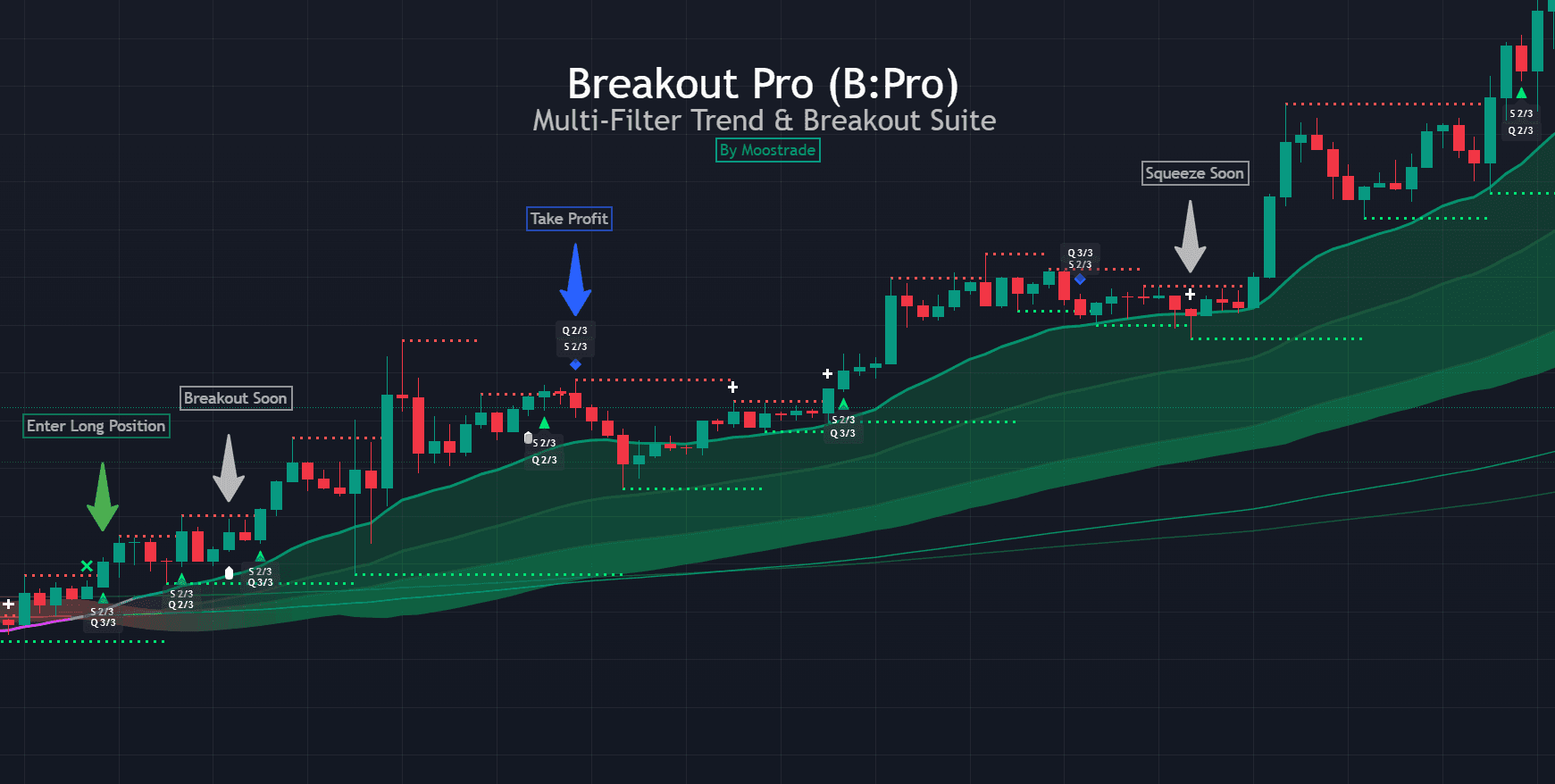
The B:PRO manual states that Cloud lines and Future Targets are dynamic and recalculate with each new candle. It also states that a Quality or Safety rating is calculated when a signal forms and remains unchanged after the candle closes and the signal is final.
Those are different behaviors: a live structural line is expected to adapt, while a finalized rating remains linked to its signal. Traders should still use live observation and Bar Replay to understand how every signal behaves before relying on it.
Non-repainting does not mean accurate, profitable, or risk-free. It only describes how historical calculations and signals behave.
A responsible testing process
Choose a small set of markets and timeframes, document the exact configuration, and observe enough signals to include trending, ranging, and high-volatility conditions. Forward-test on a demo account or very small size. Avoid changing settings after every losing trade, because constant adjustment makes the test impossible to evaluate.
Keep a record of the chart state, signal time, confirmation status, planned invalidation, and outcome. The purpose is not to prove that every signal works. It is to understand when the framework fits your process and when it should be ignored.
Frequently asked questions
Can a non-repainting indicator change on the current candle?
Yes. Current-candle calculations can update as price and volume change. The important distinction is whether confirmed historical signals change after the fact.
Does non-repainting mean the indicator is profitable?
No. Signal stability says nothing about expected returns, win rate, or suitability for a particular market.
How can I test repainting in TradingView?
Use live observation and Bar Replay, record signals when they appear, refresh the chart, and compare confirmed historical markers.
Sources & further reading
Primary references
References support platform mechanics, market structure definitions, or product documentation. They do not imply performance guarantees or endorsements.
Continue your research